Urbandale Epoxy Flooring has spent more than 20 years putting down epoxy flooring in Windsor Heights homes and businesses, and the first thing we settle on any job is what the floor actually has to do. A garage slab has to shrug off winter brine. A shop floor has to look good under steady foot traffic. A regulated work area has to meet the exact words written into a state rule, and those words are more specific than most owners expect.
Our method does not change with the address. We open every slab with a diamond grinder or a shot blaster rather than an acid etch, we write a moisture test into the scope before the price is final, and our proposal names the product line, the number of coats and the finished thickness. That gives an owner, a landlord or an inspector something concrete to hold the finished floor against.
This page covers one kind of floor that comes up in mixed-use buildings: the floor inside a designated tattoo area. If you run a storefront that sells goods, hosts classes and also offers cosmetic tattooing, part of your floor answers to Iowa’s tattooing rule and part of it does not. Knowing where that line falls changes what we install, where we install it and how we write the scope.
Shops, Studios and Cosmetic Tattooing on University Avenue
A storefront that does three things
University Avenue in Windsor Heights carries storefronts that do not fit one category. Venus Moon Studio & Shop at 6563 University Avenue shows the type clearly: it sells goods from local vendors, artists and small brands, runs craft workshops and open studio hours, and the owner offers bridal makeup and cosmetic tattooing. That is one address carrying retail, hands-on classes and a skin service under the same roof.
We mention it because it illustrates the pattern, not because we have worked there. Venus Moon is not a customer of ours, and we have not seen its layout or anything about how its rooms are finished. What it shows is a building where one concrete slab may be asked to meet three different expectations at once, and only one of them is written down in a state rule.
Why cosmetic work counts as tattooing
Iowa’s rule for the practice of tattooing, 481 IAC 492, defines tattooing to include permanent color technology and marking the skin for cosmetic purposes. Permanent brows, lip color and similar cosmetic services fall inside that definition. An owner who thinks of the service as makeup rather than tattooing is still working under the tattooing rule, floor requirement included.
The rule is administered by the Iowa Department of Inspections, Appeals and Licensing. An establishment needs a permit, the permit application includes a floor plan, and the establishment is inspected annually by the department or a contracted local inspection agency. The floor is one of the things that annual inspection sees, so it is worth getting right before the first visit rather than after it.
Looking for epoxy-flooring closer to Johnston? See Epoxy-Flooring in Johnston.
What Iowa’s Tattooing Rule Says About the Floor
One sentence, read closely
The floor requirement in 492.4(5) is a single sentence: floors in the tattoo area are finished with an impervious, washable surface. The same section asks for tables, chairs and general-use equipment in the tattoo area to be impervious and easily cleanable, and for the entire premises to be clean, sanitary and in good repair. The floor sentence is the part of that list that falls to us.
The rule also sets a minimum size, with a tattoo area of at least 300 square feet under 492.4(4), and it keeps food and drink out of that area. After each procedure, surface disinfectant is sprayed over the work area. Whatever floor goes down there will see repeated contact with disinfectant and water every working day, not an occasional mop on a Friday night.
Impervious, defined: nonporous, smooth and washable
Most building language leaves a word like impervious open to interpretation. This rule does not. Section 492.2 defines impervious as nonporous, impenetrable, smooth and washable. All four words apply at once, and each one rules out a different kind of floor that an owner might otherwise consider good enough for a small room.
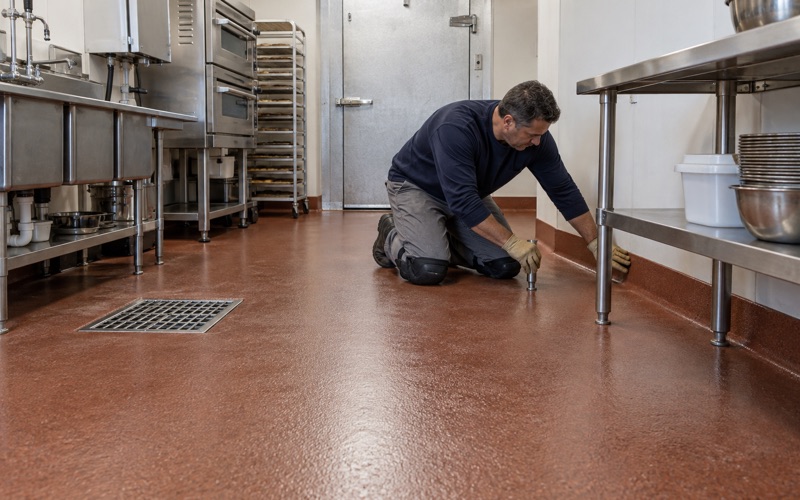
Nonporous rules out bare concrete and the penetrating sealers that soak in and leave the pores open. Impenetrable rules out a surface that lets spills wick down through seams and joints. Smooth rules out a heavy aggregate texture that holds residue in its valleys. Washable means the surface tolerates the daily disinfectant routine without softening, clouding or wearing through to the slab.
Where a resin floor fits the definition
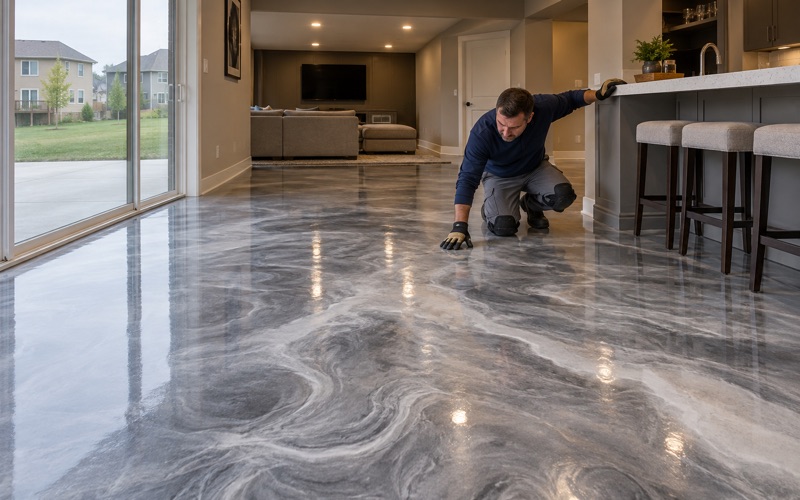
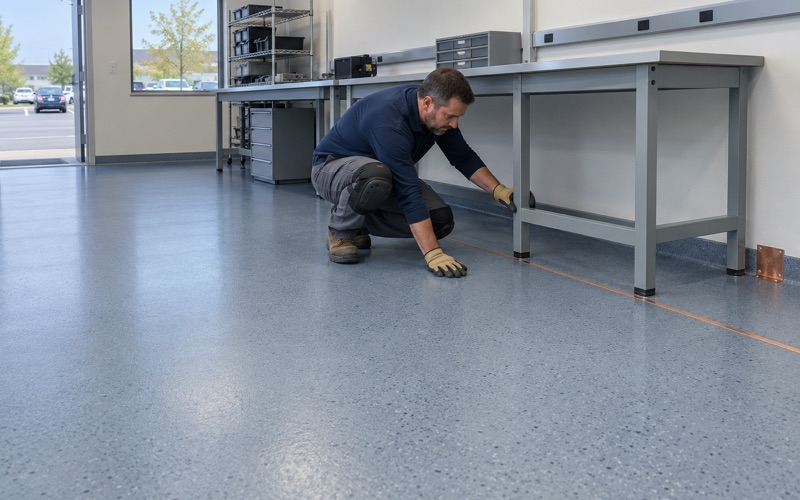
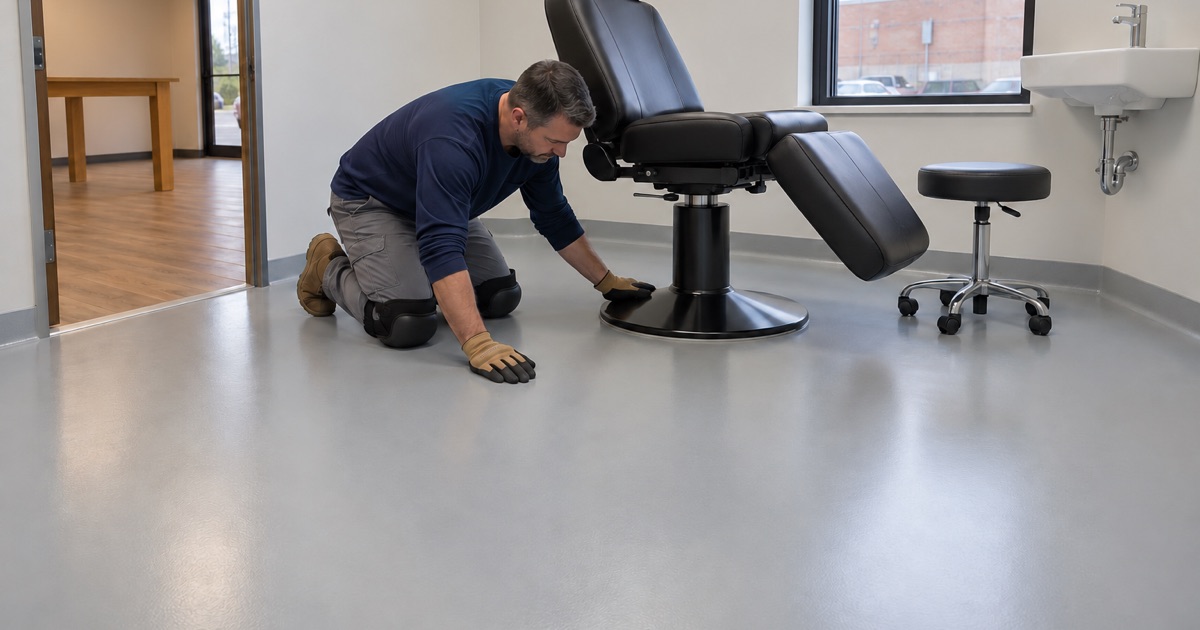
A properly bonded resin system on concrete can meet that description. A 100% solids epoxy body coat sealed with a polyaspartic topcoat gives a continuous, seamless surface with no grout lines to trap anything. Where a little grip is wanted, a fine quartz aggregate broadcast locked fully under the topcoat adds texture without leaving open pockets, and we specify slip resistance by the broadcast and topcoat rather than by a slogan.
What a coating cannot do is make an establishment compliant on its own. Compliance is decided by the state’s inspection of the whole establishment, not by the product on the floor. We install a floor built to the written definition and document what went down; the permit and the inspection belong to the owner and the department, and we never suggest otherwise.
One Storefront, Two Floor Standards
The designated portion of the building
The rule defines a tattoo establishment as the building or portion of the building designated by the owner where tattooing is practiced. In a mixed storefront, that wording matters a great deal. The impervious, washable floor requirement attaches to the designated tattoo area, which is the room or zone the owner shows on the permit floor plan.
The retail floor and the workshop space sit outside that designation. They fall under the general expectation that the premises are clean and in good repair, and nothing more specific than that. An owner is free to choose a different floor for those spaces based on looks, budget and how each room is used from one week to the next.
Matching the floor to the permit floor plan
Before we price a mixed-use job, we ask for the floor plan the owner submitted, or plans to submit, with the establishment permit. We mark the boundary of the tattoo area on the slab itself, and the proposal lists that area’s system separately from everything else. If the plan changes later, the scope can be checked against it line by line.
A tattoo area is a modest footprint, so the edges matter as much as the field. We look at where the coating meets the wall, where it meets the adjoining floor and where a threshold or transition strip sits. A smooth, washable field with a ragged, open joint at the doorway is not what the definition describes, so we detail those edges in the scope.
Floors for the shop and the craft workshops
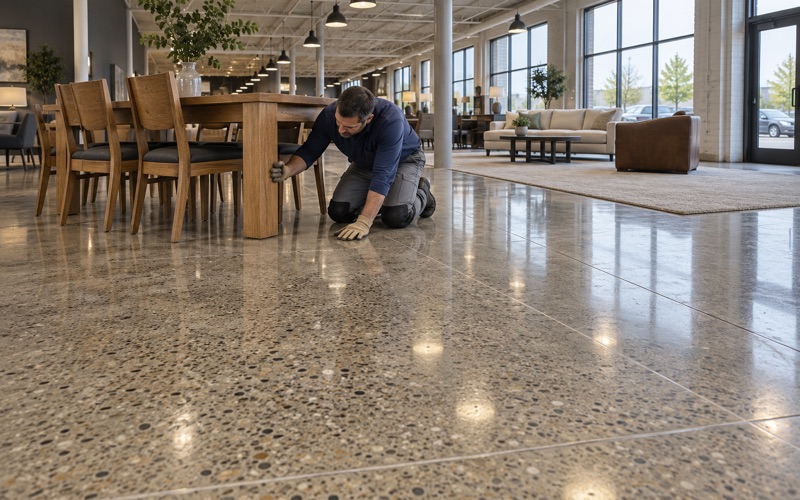
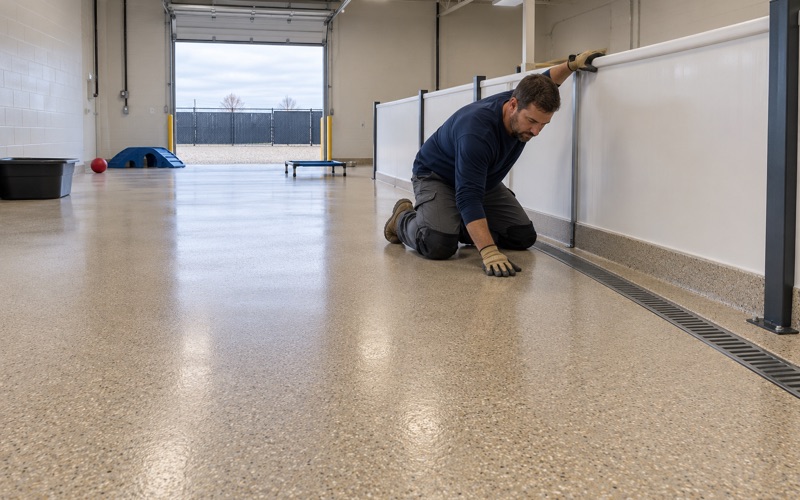
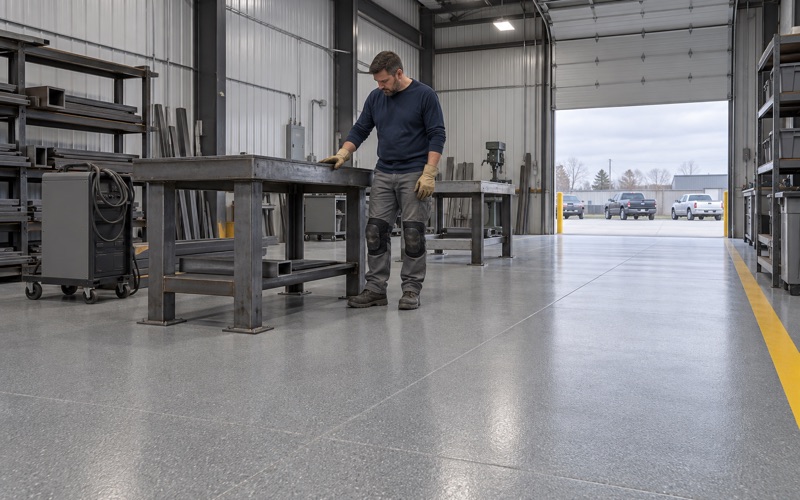
Workshop floors in a craft studio take paint, glue, clay and dropped tools. A broadcast vinyl flake floor under a clear topcoat hides that kind of wear and accepts local repairs, which suits a room where tables and chairs move every week. Retail floors can follow the same system or a plainer finish, depending on the look the owner wants customers to see.
Some owners prefer one system across the whole storefront so the space reads as a single room. That works as long as the tattoo area’s finish still meets the smooth, nonporous standard. Others keep the regulated room on its own specification, so it can be maintained and recoated without closing or disturbing the shop floor next to it.
Slab Prep, Moisture and the Home Garage Question
Preparation that holds up to disinfectant
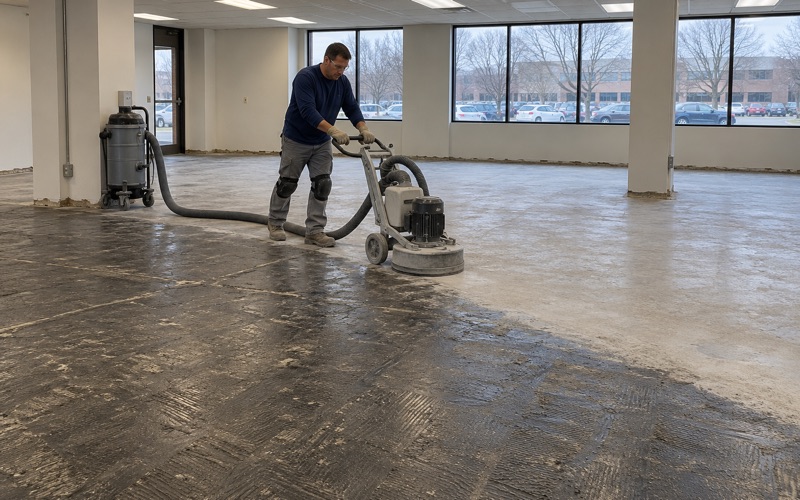
A floor wiped with disinfectant after every procedure has to stay bonded. We grind or shot blast to an ICRI concrete surface profile suited to the system, then map cracks, spalls and old coatings before the price is final. If a slab should be repaired or replaced before it carries a coating, we say so plainly in the proposal instead of coating over the problem.
Grinding dust is captured at the machine by vacuum rather than swept or washed toward a floor drain. In an occupied storefront, that keeps the retail side open and clean while we work in the designated area. When a shop cannot close during business hours, we phase the job into evening or weekend windows so sales and classes carry on.
Testing before the price is final
Most homes in Windsor Heights were built in the 1950s and 1960s, many slabs here are decades old, and an older slab’s vapor retarder, if it has one, cannot be confirmed from above. We run ASTM F1869 calcium chloride tests or ASTM F2170 in-situ relative humidity probes before committing to a system, because a coating bonded to a damp slab can blister long after the room is in use.
If readings come back high, a moisture-mitigation primer goes into the scope, and the warranty conversation starts with moisture, since vapor transmission is the first exclusion we name. Cure timing follows slab temperature and the dew point spread at the surface, so a winter installation waits for the right conditions rather than for a date on the calendar.
Why a coated home garage never becomes a studio
We are sometimes asked whether a well-coated attached garage could serve as a home studio for cosmetic tattooing. Under 492.3(4), tattooing shall not be practiced in a residential dwelling, inclusive of an attached garage, and new establishments must be in commercial buildings where zoning ordinances exist. No floor coating, however smooth or washable, changes that.
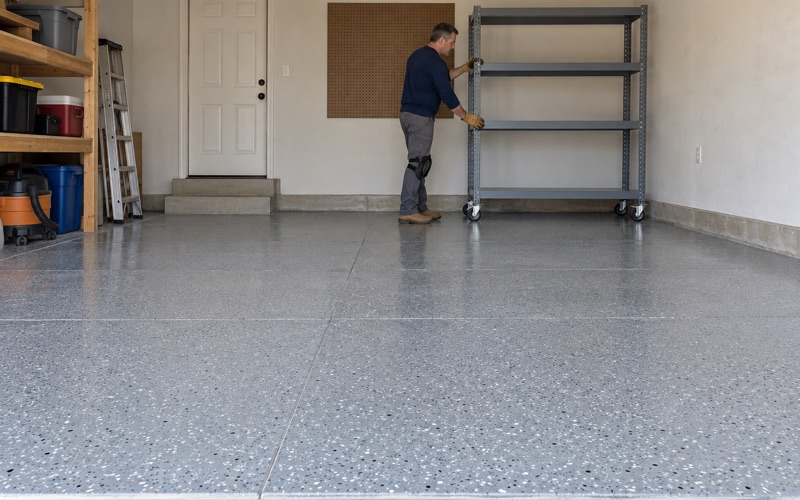
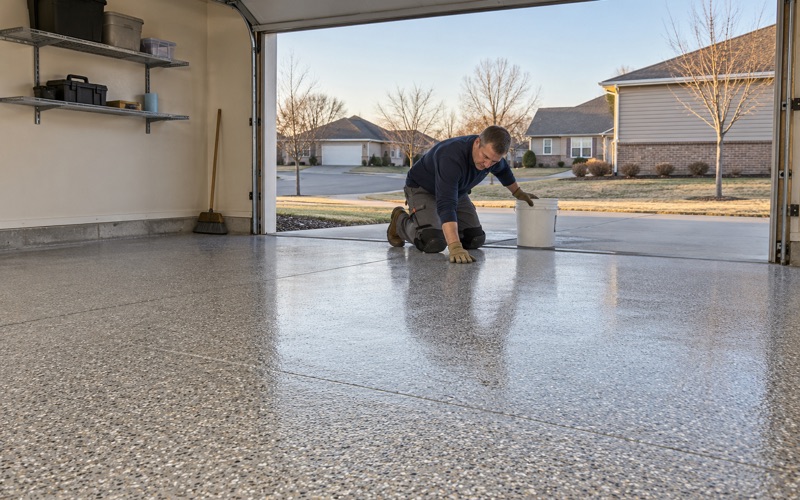
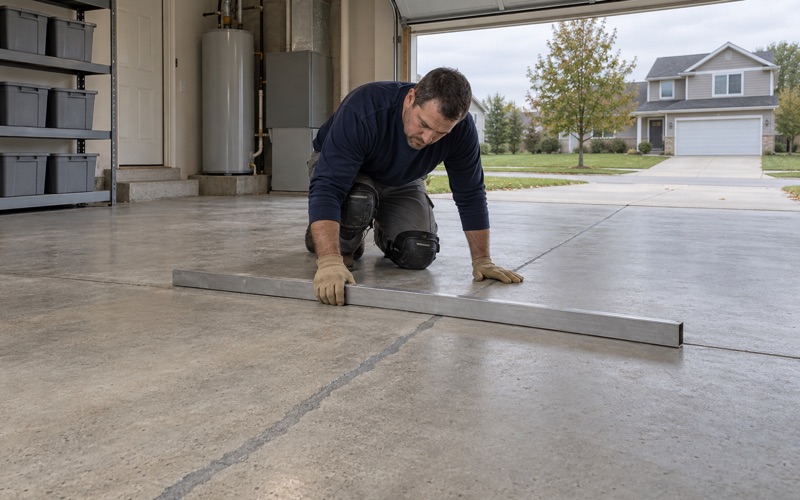
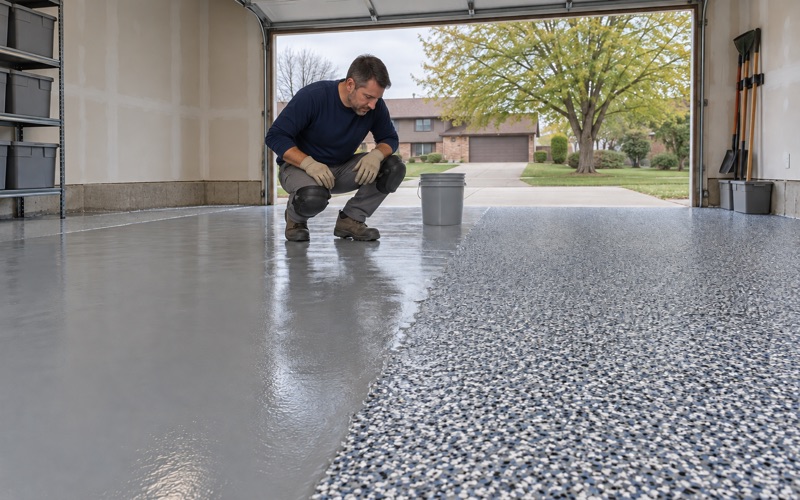
A garage floor in Windsor Heights should be coated for what a garage actually faces: hot tire pickup, rock salt and calcium chloride brine riding in from November through March, and the occasional dropped tool. We choose those systems for durability and footing at the door, and we never present them as a route to a permitted studio.
If you are planning a mixed-use storefront in Windsor Heights or recoating a tattoo area that has worn through, we start with the floor plan and the slab, then write down exactly what goes where. The permit and the inspection stay with the state. A floor built to the written definition, and documented so anyone can check it, is our part of the job.
- 20+ Years on Iowa Slabs
- Moisture Tested Before Pricing
- Coats and Thickness in Writing