Urbandale Epoxy Flooring installs polyaspartic floor coatings in Urbandale, IA, serving surrounding cities including Clive, Grimes, Windsor Heights, Johnston, West Des Moines. With 20+ years on central Iowa slabs, we use polyaspartic as a full system, as a clear wear coat over epoxy, and as the binder for flake floors in garages, shops, showrooms and commercial spaces.
Polyaspartic has become popular because it cures fast and holds its color in sunlight. Those are real advantages, but they only pay off on a slab that has been ground, tested and repaired, because a quick cure does nothing for a coating sitting on a weak or damp surface.
Our proposals name the polyaspartic product line, how many coats go down and the finished thickness of the system. That way you can compare it against a one-day install quote and see whether the speed came from the chemistry or from skipping steps.
What Makes Polyaspartic Different
Fast Cure and Short Working Time
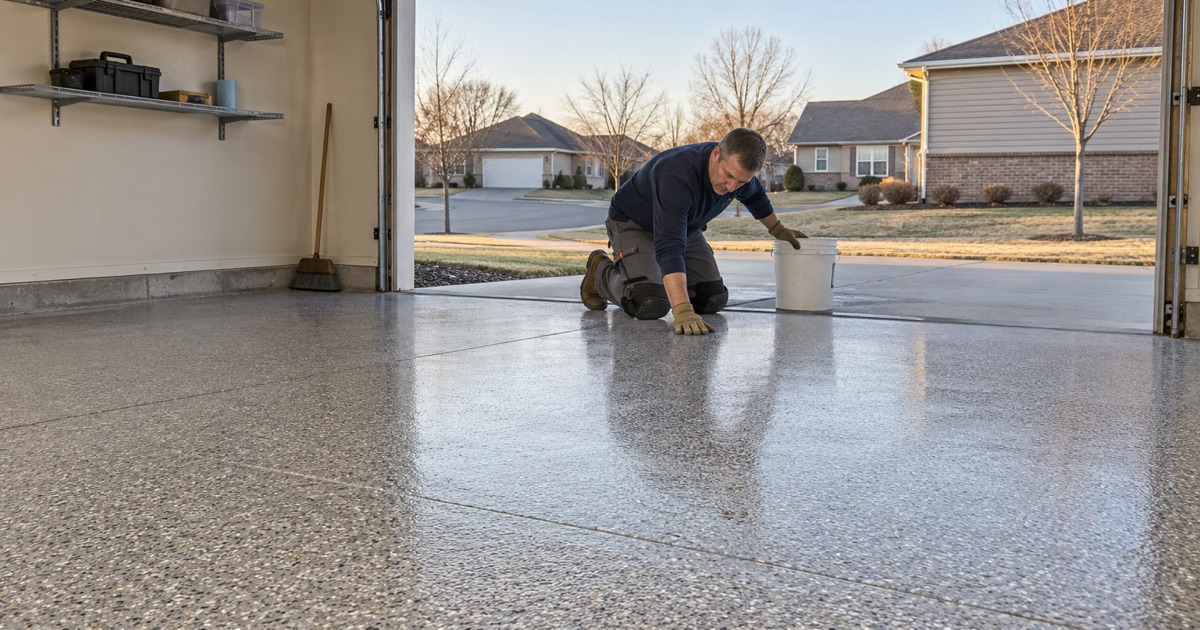
Polyaspartic reacts quickly, which lets a crew apply several coats in a day and return a floor to service sooner than a slow epoxy. The same speed means a short pot life, so the material has to be mixed in small batches and spread fast by people who have done it many times.
That working time is why we run polyaspartic jobs with an experienced crew and a set order of work. Lap lines, roller marks and missed spots set up in minutes, and there is no going back to fix them once the coating has kicked.
UV Stability and Color Hold
Aliphatic polyaspartic coatings resist the yellowing and chalking that aromatic epoxies show in ultraviolet light. On a garage with the door open on summer afternoons, or a showroom by a glass wall, a polyaspartic topcoat keeps the floor looking like the day it was finished.
This is the most common reason we put a polyaspartic topcoat over an epoxy base. The epoxy carries the thickness and bond, and the polyaspartic shields it from the light that would otherwise turn a gray floor slightly amber over a few seasons.
Abrasion and Chemical Resistance
A cured polyaspartic film is hard and tough. It holds up to tire traffic, dragged equipment and grit tracked in from a winter street, and it resists many automotive fluids and the brine from calcium chloride and rock salt deicers.
No floor coating is immune to everything, so we match the topcoat to what will actually land on the floor. A shop with brake fluid and solvents may need a different chemistry than a garage that sees mostly road salt and rain.
Where We Use Polyaspartic Systems
Garage Floors
In a residential garage, a polyaspartic topcoat over a 100% solids epoxy base with a full vinyl flake broadcast is the system we install most. It brings the thickness and bond of epoxy, the decorative look of flake, and a clear wear layer that resists hot tire pickup and road salt.
For a garage that needs to be back in use quickly, we can build the whole system in polyaspartic. That choice makes sense when the slab tests dry and the schedule is tight, and we explain the trade-offs in cost and working time before you decide.
Workshops and Home Gyms
Workshops and home gyms see dropped tools, rolling carts and heavy weights. A polyaspartic finish with a light quartz or flake broadcast gives a tough, cleanable surface with some grip, and its quick cure keeps the space out of service for a shorter stretch than a full epoxy system would.
Under rubber gym flooring or heavy stall mats, we look at how the mats will sit on the coating and whether they trap moisture against it. A loose mat on a coated floor is fine, but an adhered mat or a mat that stays wet can mark any finish, so we plan the layout with you before the topcoat goes down.
Showrooms, Lobbies and Light Commercial Floors
In showrooms and lobbies, polyaspartic topcoats keep metallic and flake floors bright under daylight and store lighting. The faster cure also helps businesses that can only close for a night or a weekend, because a phased area can be coated and reopened within a short window.
We plan those jobs in sections, with the schedule naming each area and when it reopens. Odor and ventilation are part of that plan, and low-odor products are available where staff or customers are nearby.
Getting Polyaspartic Right on Iowa Slabs
Grinding, Not Etching
Because polyaspartic grabs the surface fast, it has less time to soak into the pores than a slow epoxy. A ground profile in the CSP 2 to 3 range gives it the texture it needs to bond, and an acid etch, with its uneven profile and residue, is never part of our process.
Grinding also takes off the curing compounds, sealers and paint that a slab picks up over the years, any of which can stop a coating from bonding. We run the grinder with a vacuum shroud, so the dust is captured at the head rather than washed toward a floor drain or out the garage door to a storm inlet.
Moisture and Dew Point
A polyaspartic coat applied over a damp slab, or onto a surface near the dew point, can bubble and lose its bond. We test the slab with ASTM D4263, F1869 or F2170 methods, use a moisture-mitigation primer where the reading calls for it, and check the dew point spread on the day of the work.
Central Iowa’s spring and fall swing quickly between warm afternoons and cold, damp mornings. We schedule applications for the part of the day when the slab is comfortably above the dew point, rather than the hour that happens to be convenient on the calendar.
Road Salt and Winter Traffic
From November through March, garage and entry floors take a steady load of brine and grit. A polyaspartic topcoat resists the salt, and a broadcast keeps some texture underfoot when slush is melting. We choose the texture for how wet the floor gets rather than promising any floor is non-slip.
On bare concrete, that same brine soaks into the pores, freezes and pops the surface into scaling. A coated slab keeps the salt on top, where a squeegee and a rinse with clean water remove it, and the polyaspartic layer does not etch or dull the way some cheaper topcoats do after a few winters of chloride exposure.
Our Step-by-Step Polyaspartic Process
Step 1: Slab Assessment and Proposal
We test the slab for moisture, map cracks and old coatings, and decide with you whether the floor gets a polyaspartic topcoat over epoxy or a full polyaspartic system. The proposal names the products, coats and finished thickness.
Step 2: Grinding and Crack Repair
The slab is diamond ground with dust captured at the machine. Cracks, spalls and pits are then filled and ground flush so the finish stays level.
Where a slab has heaved, settled or broken into loose sections, we say so before pricing. A coating bonds to the concrete it is given, and a failing slab needs repair or replacement first, not a faster coating on top of it.
Step 3: Base and Broadcast
The base coat goes down to its specified thickness, with flake or quartz broadcast in if the system calls for it. After cure, loose broadcast is scraped and vacuumed off.
Step 4: Polyaspartic Topcoat and Return to Service
The polyaspartic topcoat is applied in a controlled order, and we hand you a written schedule for foot traffic, light items and vehicles. A walk-through closes the job.
We also leave care instructions with the cleaner to use and the ones to avoid. A pH-neutral cleaner and a soft mop keep the topcoat clear, while harsh acids and abrasive pads dull it, and that small difference decides how the floor looks five years on.
- 20+ Years on Iowa Slabs
- Moisture Tested Before Pricing
- Coats and Thickness in Writing