Urbandale Epoxy Flooring installs metallic epoxy floors in Urbandale, IA, serving surrounding cities including Clive, Grimes, Windsor Heights, Johnston, West Des Moines. After more than 20 years of coating central Iowa slabs, we pour metallic floors in finished basements, showrooms, lobbies, offices and show garages, each one built on a slab that has been ground flat and tested for moisture before the first drop of pigment goes down.
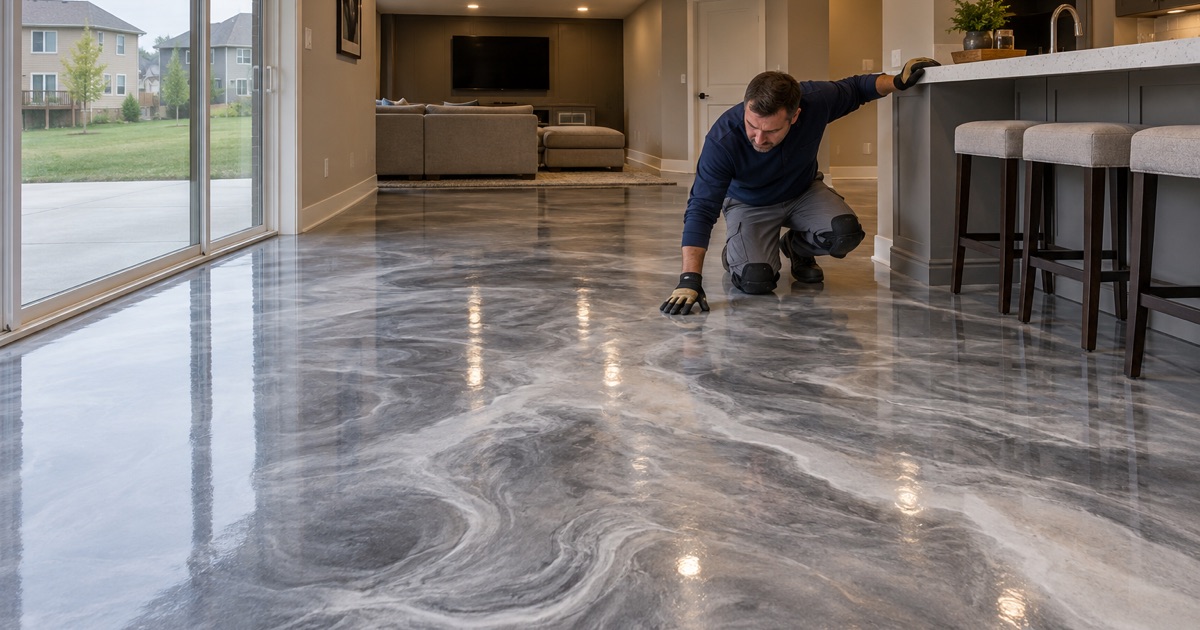
A metallic floor uses pearlescent pigments suspended in a clear or tinted epoxy. As the resin levels, the pigments move and settle, leaving a marbled, three-dimensional finish that reads like polished stone or deep water. That movement is what makes the floor striking, and it is also why the installation has so little margin for error.
Our proposal names the base product, the metallic blend, the number of coats and the finished thickness. Because metallic floors are poured thick and finished glossy, every flaw in the slab and every pause in the pour shows, so the preparation and the crew matter more than on almost any other coating.
How a Metallic Floor Is Built
A Flat, Ground and Repaired Slab
A metallic pour flows to level, so any dip collects more material and shows as a darker pool, and any crack or patch can telegraph through the finish. We diamond grind the slab, fill cracks and pits, and grind the repairs flush so the floor is as flat as possible before the base coat. Grinding dust is captured at the machine by vacuum rather than swept or washed away.
We also check the floor with a straightedge before quoting. A slab with a pronounced low spot or a ridge at a joint may need a self-leveling underlayment or extra grinding, and that work shows up as its own line in the proposal rather than as a surprise on install day.
Moisture Testing and Primer
A thick, glossy metallic film is a poor place for vapor to push through, and blisters on a metallic floor are hard to hide. We test basement and garage slabs with ASTM D4263, F1869 or F2170 methods before pricing, and where the reading is high we use a moisture-mitigation primer. A slab that is still taking water needs a drainage fix first.
We also watch the dew point on the day of the pour. A cool basement slab close to the dew point can collect moisture on its surface, and that leaves amine blush or a hazy film on an epoxy that is meant to look like glass, so the cure schedule follows the slab rather than the calendar.
The Base Coat and the Metallic Pour
A tinted base coat goes down first and sets the background color. The metallic layer follows, mixed and poured in one continuous pass, then worked with rollers, trowels or sprayed solvent to create the movement. The crew has to keep a wet edge across the whole room, because a lap line or a stalled edge sets up within minutes and stays visible after cure.
That is why we stage the room before mixing anything. Doorways, columns and cabinets are planned into the pour sequence, enough material is batched to finish the space without stopping, and each crew member knows which section they are working, so the pattern runs continuously from wall to wall.
A Protective Topcoat
Epoxy ambers in ultraviolet light and is softer than a dedicated wear coat. A clear polyaspartic or urethane topcoat protects the metallic layer from scratches, scuffs and sunlight, and it can be renewed years later without disturbing the pattern underneath.
The topcoat is where most of the daily wear lands. Chair legs, pet claws and grit tracked in on shoes all mark the surface layer first, so keeping it in good shape with felt pads and walk-off mats protects the metallic layer, and a scuff-and-recoat restores the shine when traffic has dulled it.
Choosing a Metallic Look
Color Blends and Movement
Metallic blends range from silver and charcoal to copper, bronze, blue and green. A single color with gentle movement gives a calm, stone-like floor, while two or three colors worked aggressively give a dramatic swirl. We show you photos of finished floors in the same blend, since a sample board cannot show how a full room will move.
Light changes the look as well. A floor that reads as soft gray under warm basement lights can look cooler and more silver near a north window, so we look at your room’s lighting with you before settling on a blend. Darker bases make the metallic movement stand out more, and lighter bases give a softer, cloudier effect.
Gloss, Satin and Grip
A high-gloss topcoat gives the deepest look but shows dust and fine scratches. A satin topcoat softens both and is easier to live with in a busy space. Where a floor may get wet, a fine grit in the topcoat adds traction, and we specify that by the product used rather than promising a floor is slip-proof.
Where Metallic Floors Work Best
Finished Basements and Rec Rooms
Metallic epoxy suits a dry, finished basement where the floor is part of the design. Bars, theater rooms and rec rooms get a floor that is easy to clean and looks custom. Low-odor products are available for basements as a comfort choice, since the house above shares the air.
The floor drain and sump pit stay open and working, with the coating finished neatly to the drain body and the sump rim. A metallic floor in a basement is a finish for a dry room, not a way to seal one, so any past water gets sorted out before the pour.
Showrooms, Lobbies and Offices
In showrooms and lobbies, a metallic floor gives a high-end look without stone or tile. We phase commercial pours around business hours, with night or weekend windows when a space cannot close, and schedule each area so the topcoat has cured before fixtures and traffic return.
Show Garages
In a garage that holds a collector car rather than the daily driver, a metallic floor with a UV-stable topcoat makes a strong backdrop. For a garage that takes road salt and slush every winter day, we usually recommend a flake system instead, and we will say so.
- 20+ Years on Iowa Slabs
- Moisture Tested Before Pricing
- Coats and Thickness in Writing