
Urbandale Epoxy Flooring installs flake epoxy floors in Urbandale, IA, serving surrounding cities including Clive, Grimes, Windsor Heights, Johnston, West Des Moines. Across 20+ years of coating central Iowa slabs, the vinyl flake floor has become the system most of our garage and basement customers choose, because it hides dust and salt film, adds texture underfoot and comes in enough blends to suit almost any space.
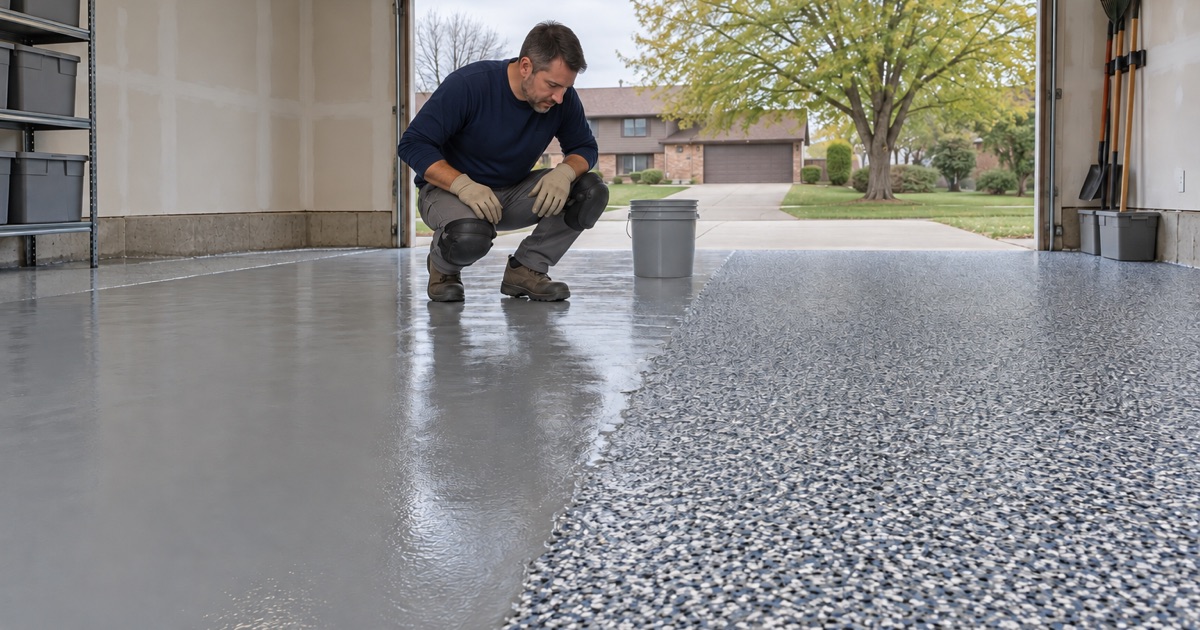
A flake floor is built in layers. A base coat of epoxy goes down over a ground and repaired slab, vinyl flake is broadcast into it while it is wet, the excess is scraped and vacuumed off after cure, and a clear topcoat locks the chips in. Every layer matters, but the slab work underneath matters most.
Our proposal names the base product, the flake blend and chip size, the broadcast rate, the topcoat and the finished thickness. That detail lets you compare our flake floor with another quote and see whether both describe the same system or only the same color.
How a Flake Floor Is Built
Grinding and Repairs First
Every flake floor starts with a slab opened by a diamond grinder or a shot blaster, never an acid etch. Grinding removes the weak top layer, old sealers and oil, and leaves the texture the base coat needs to bond. Dust is captured at the machine by vacuum rather than swept into the yard or washed toward a drain.
Cracks, spalls and pitted patches are then filled and ground flush. A full flake broadcast hides small repairs well, but it cannot hide a crack that keeps moving, so we say plainly when a slab should be repaired or replaced before it is coated.
Moisture Test Before the Base Coat
A moisture test is in the scope before the price is final, whether the slab is in a garage or a basement. We start with an ASTM D4263 plastic sheet screen and use calcium chloride or relative humidity tests where it raises a question. A high reading calls for a moisture-mitigation primer under the base coat.
Garage slabs deserve the test as much as basements do. The IRC R506.2.3 exception lets a garage slab go in without the vapor retarder that sits under the house, so a newer home is not proof of a drier garage floor.
The Base Coat and the Broadcast
The base coat is applied to thickness and tinted to blend with the flake. While it is still wet, flake is thrown into it by hand, evenly across the floor, either as a partial scatter or a full broadcast to rejection where the surface will hold no more.
Timing matters. Flake thrown too late does not seat in the base, and flake thrown unevenly leaves light and heavy patches that show once the floor is topcoated, so the broadcast follows the roller closely across the room.
Scrape, Vacuum and Topcoat
After the base cures, the loose flake is scraped off with a floor scraper, which also knocks down chips standing on edge, and the floor is vacuumed clean. A clear topcoat, usually polyaspartic or polyurea, then seals the chips and becomes the wear layer.
The topcoat sets the final texture. One heavier coat or two coats produce a smoother surface that is easy to clean, and a lighter build leaves more texture for grip. We choose that with you based on how much water and snow melt the floor will see.
Choosing a Flake Look
Blends and Colors
Flake blends range from grays and tans to blues, reds and high-contrast black and white mixes. Earthy gray and tan blends hide road salt and dust especially well, which suits a working garage, while bolder blends make a statement in a show garage or a commercial lobby.
We bring sample boards so you can see a blend in your own space’s light. Color reads differently under a garage door opener bulb than in afternoon sun, and a sample on the actual floor is the best preview.
Chip Size
Flake comes in sizes from fine to large. Smaller chips give a tight, granite-like speckle that looks refined, and larger chips give a bolder terrazzo look. Larger chips also take a heavier topcoat to fully encapsulate, which we account for in the finished thickness.
Full or Partial Broadcast
A full broadcast hides the base color completely and gives the most even surface and the best wear. A partial broadcast lets the base color show between chips, which suits a lighter, more modern look, but it leaves more of the base exposed to wear.
Where Flake Floors Work Best
Garages Through Iowa Winters
From November through March, brine and rock salt ride into the garage on every tire. A flake floor keeps that salt on the surface, where a squeegee and a rinse remove it, and its multicolor chips hide the salt film between washes. We choose the topcoat for its resistance to chloride slush and hot tire pickup.
In an unheated garage, the cure schedule follows the slab temperature and the dew point rather than the calendar. A garage in January may need to wait for warmer weather, and we would rather move the date than install a soft or cloudy floor.
Basements, Shops and Commercial Spaces
In basements, flake gives laundry rooms and gyms texture and an easy-clean surface. In shops and commercial spaces, a full broadcast with a harder topcoat handles carts and foot traffic and looks finished in a lobby or break room, and we phase commercial jobs around business hours.
- 20+ Years on Iowa Slabs
- Moisture Tested Before Pricing
- Coats and Thickness in Writing