Urbandale Epoxy Flooring has spent more than 20 years on garage floor coating in Des Moines, and the first question we ask about any slab is where it sits. A floor poured on the ground and a floor hung in the air move differently, and the right coating for one can fail on the other. Most homeowners never need to think about that difference, but it explains a great deal about how we work.
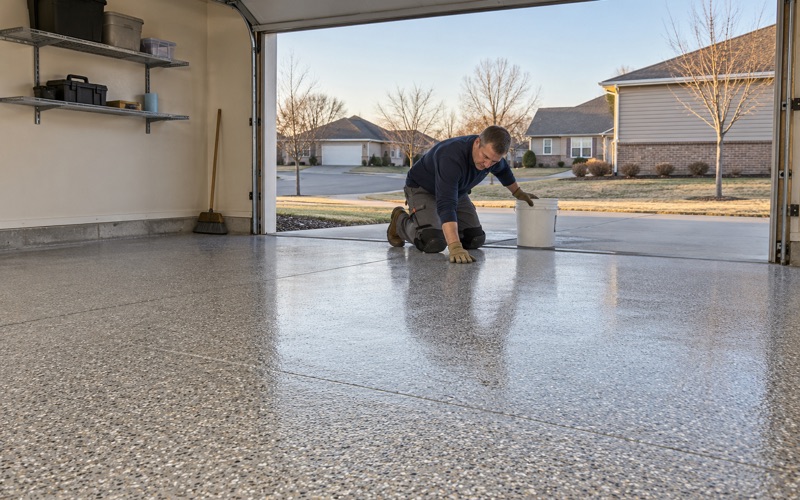
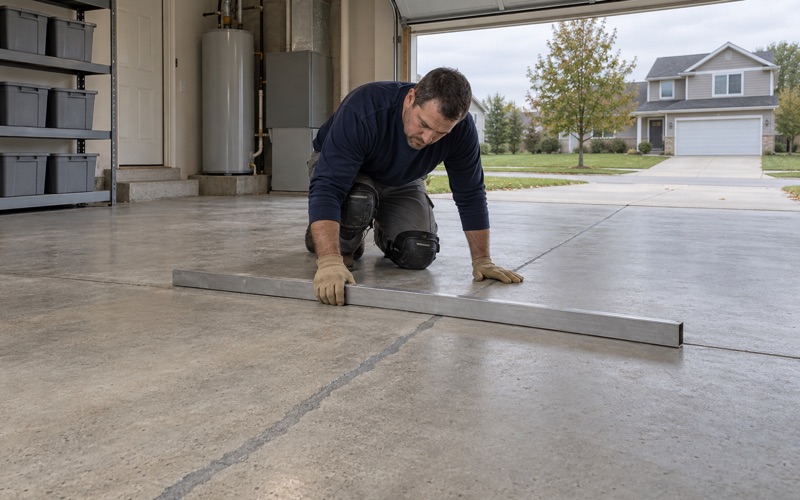
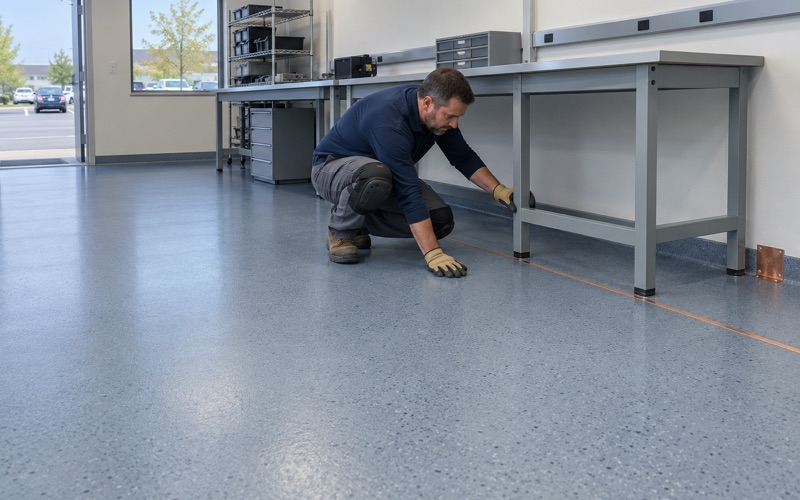
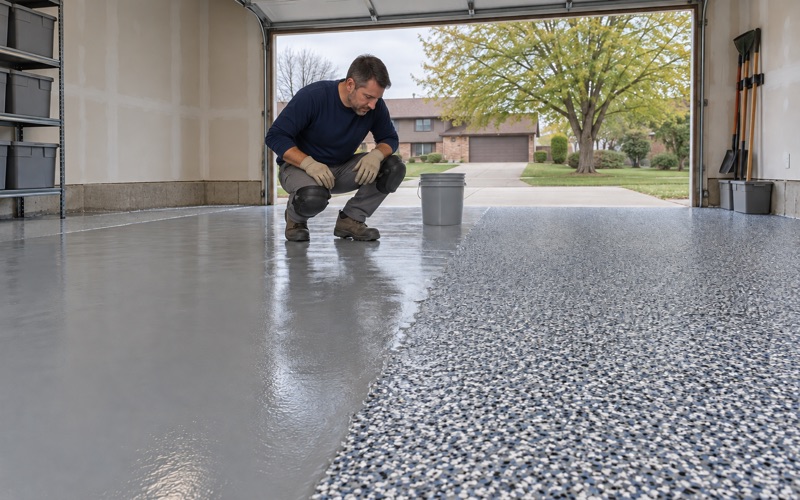
On a residential garage, our job starts with a diamond grinder or a shot blaster rather than acid, so the coating has a real profile to grip. We map cracks, spalls and any old coating before we price, and a moisture test goes into the written scope before the number is final. If a slab should be repaired or replaced first, we tell you that plainly.
The proposal names the product line, the coat count and the finished thickness, so you can hold the finished floor up against what you were sold. Below, we use two downtown parking garages to show why one floor gets a rigid system and another gets a flexible one, and what that means for yours.
Two City Garages and Their 2021 Repair Program
What the council approved
The City of Des Moines owns parking garages downtown and repairs them on a program rather than waiting for something to break. Council Communication 21-507, on the agenda for December 6, 2021, set out the 2021 Parking Garage Repair Program for two of them: the 5th & Keo garage on 5th Avenue north of Grand, and the 3rd & Court garage between 3rd Street and 2nd Avenue north of Court Avenue.
The construction estimate was $235,000, paid from the parking system’s own rehabilitation and repair fund, with work expected to start in spring 2022 and finish by the end of that year. The scope read like a structural checklist: corroded purlins and beams cleaned and painted, spalled or delaminated concrete patched, expansion joints replaced at isolated locations, and worn fireproofing renewed.
Why the coating made the list
One line in that scope matters most to anyone choosing a floor coating. The city included replacing the traffic coating system in isolated locations, and gave the reason in four words: to protect the floor. The coating sits on the list beside the concrete patching and the steel work, not as a cosmetic finish laid over the top of them.
That pairing is the lesson. On an elevated deck, the membrane is part of how an owner keeps the structure underneath in good shape, so it is renewed as maintenance, in rounds. We were not involved in that job and never read which products or contractor it used; the garages are simply a public, documented example of how a deck is treated.
The city has kept the cycle going. Search summaries describe a 2026 Parking Garage Repair Program request for proposals that again lists crack sealant work and partial-depth floor repairs, with traffic coating and penetrating sealers carried as add-alternates. Decks are inspected, patched and recoated on a schedule, which is a very different lifespan from a home garage floor.
Looking for epoxy-flooring closer to Polk City? See Polk City Epoxy-Flooring.
A Parking Deck Is Not a Garage Floor
Rigid coatings belong on the ground
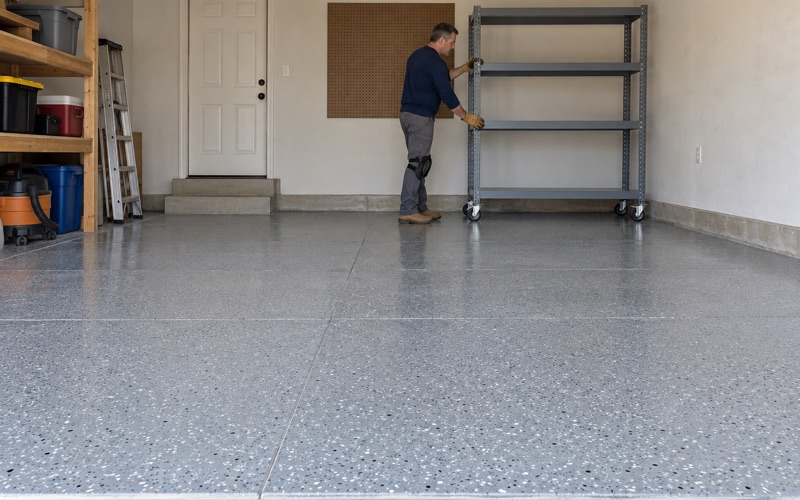
A garage slab poured on grade rests on compacted base along its whole underside. It shrinks, cracks a little and then mostly stays put, which is why a rigid system such as 100% solids epoxy under a polyaspartic topcoat is the normal choice. Hard, bonded coatings like that resist hot tire pickup and abrasion well, as long as the slab beneath is dry and properly profiled.
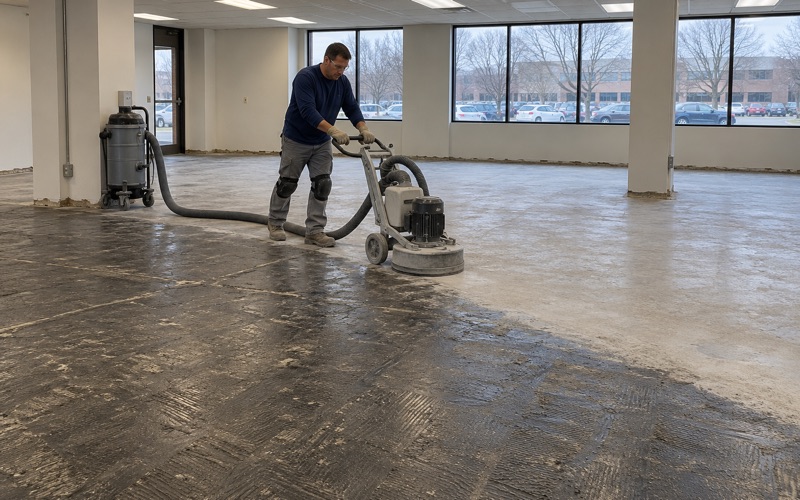
That is where our own process carries the weight. We open the surface to the ICRI concrete surface profile the product calls for, capture grinding dust at the machine with a vacuum, and test moisture whatever year the house was built. A newer home in Des Moines is not proof of a drier slab, so we measure with ASTM F2170 probes or ASTM F1869 calcium chloride tests rather than assume.
Elevated decks bend under load
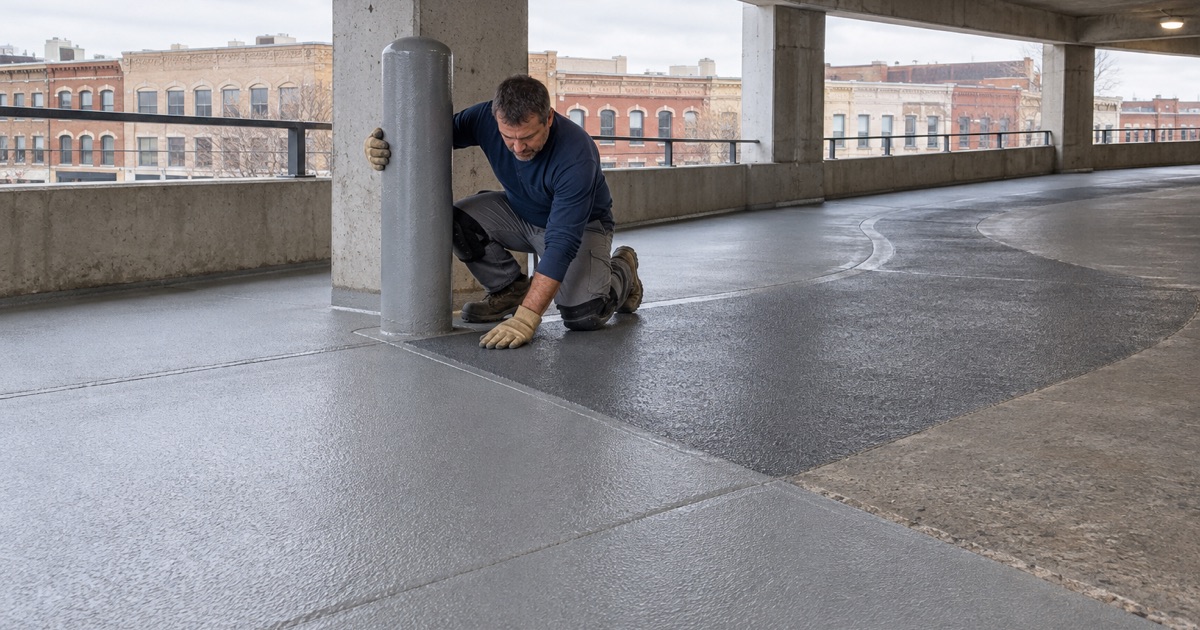
An elevated parking deck is a structural slab spanning between beams and columns. It deflects as cars drive across it, grows and shrinks with temperature through the year, and its cracks open and close rather than sitting still. A rigid epoxy bonded over a working crack tends to split right along with it, and once the coating splits it stops protecting anything.
That is why deck owners specify a traffic coating instead. It is an elastomeric membrane that stretches across movement, built in layers and detailed at every weak point. The concrete underneath still has to be sound, so spalls are patched first and the membrane goes on afterward, the same order the city’s 2021 scope followed.
Which one your floor needs
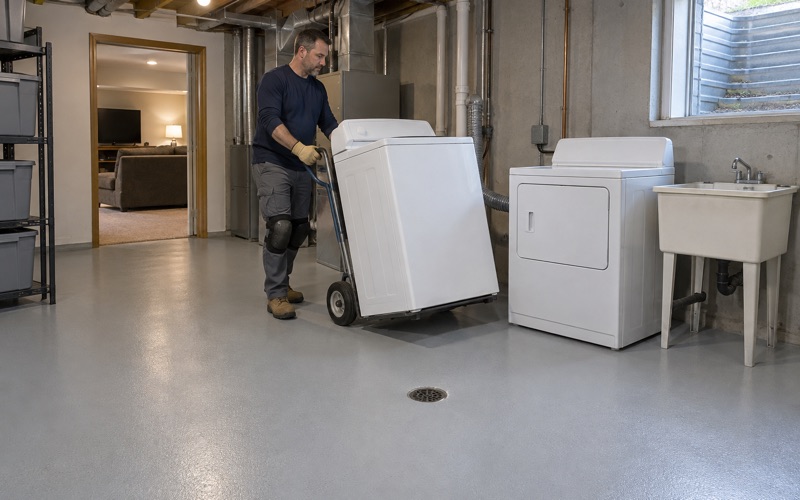
Most Des Moines homeowners have a garage slab on the ground, attached or detached, and a rigid system suits it. Where we find an elevated slab instead, such as a garage floor poured over a basement room, a podium deck under apartments, or a small commercial ramp, we treat it as a different job and say so in writing before anything is priced.
We would rather explain that a floor needs a membrane system, or structural repair first, than sell a garage-floor epoxy the slab will eventually crack through. When a condition calls for an engineer’s eyes, we say that too, before any money changes hands.
Inside a Traffic Coating System
Elastic, layered and tested to ASTM C957
One maker’s published system shows what separates a traffic coating from a garage floor coating. Holcim’s Elasto-Deck 6500 is a two-component, aliphatic polyurethane sold as an elastomeric traffic coating for parking decks, roof decks and balconies. Its data sheet lists 300 percent elongation at break and states that it complies with ASTM C957, the specification written for liquid-applied elastomeric membranes that carry their own wearing surface.
The vehicular build is a primer, a base coat, and then a coat with aggregate broadcast into it at 12 to 15 pounds per 100 square feet. The concrete must reach at least 4,000 psi, read below 4.5 percent moisture on a Tramex meter, and be prepared by grinding or shot blasting. That last requirement is the same discipline we bring to a home garage.
Cracks get more coating, not less
Crack detailing is where a deck membrane differs most from a garage floor. The data sheet says to rout or saw-cut every crack wider than 1/16 inch and fill it with sealant, then build the base coat to 25 mils of dry film over each crack and for 1-1/2 inches on either side. The thickest coating sits exactly where the slab moves.
Joints wider than an inch, or moving more than 25 percent, are not coated over at all. On a slab on the ground we still map and repair cracks before coating, but we do not pretend a rigid floor coating will bridge a crack that keeps opening and closing under it.
Turns, ramps and the extra wear coat
Tires do their hardest work where cars turn and climb. The system calls for an additional broadcast and back-rolled coat at turn radius and ramp areas, on top of the standard wear layer, because a wheel scrubbing sideways under steering wears aggregate out faster than straight-line traffic does.
A home garage has a smaller version of the same pattern: the spot where a car swings in and stops, and the strip under the tires at the threshold. We choose the vinyl flake or quartz broadcast and the topcoat with those zones in mind, and slip resistance comes from that texture, specified in the proposal rather than promised as a slogan.
The same data sheet warns that its topcoat can stain from nitrates, fertilizers and hard water, and is repaired by priming and recoating the system. Every coating has limits like that, which is why we explain warranty exclusions before a job is sold, and moisture is the first one we name.
Three to Four Days Before Cars Return
Why a deck stays closed longer
The maker calls for a minimum of 72-96 hours of cure before vehicles go back on the membrane. For a garage owner that means a level or a ramp section closed for most of a week, which is one reason repair programs like the city’s work in isolated locations and phases rather than shutting a whole structure down.
Application has limits too: at least 40 degrees and rising, with the surface more than 5 degrees above the dew point. Moisture condensing on cold concrete during placement can spoil adhesion before the first coat ever cures, and no amount of extra waiting fixes that afterward.
Cure time on a Des Moines home garage
Our residential systems usually return a garage to cars well before a deck membrane would, but we still schedule by slab temperature and dew point rather than by the date on the calendar. An unheated garage in a central Iowa winter waits until conditions allow, and we would rather move a start date than rush a cure.
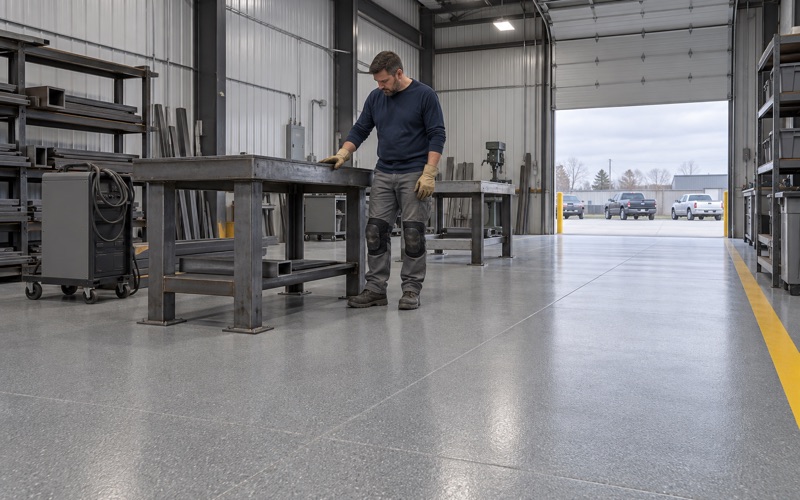
We state the walk-on time and the drive-on time in the proposal for the specific product we name. If the floor sits under a commercial space, an office or a flex bay, we phase the work around tenants and can use night or weekend windows when the space cannot close.
Before you call
It helps to know whether your garage slab sits on the ground or spans over something, whether it has been coated before, and whether water has ever stood on it. Bring those answers and we will bring a moisture test, a crack map and a written scope that tells you which kind of coating your floor actually needs.
- 20+ Years on Iowa Slabs
- Moisture Tested Before Pricing
- Coats and Thickness in Writing